
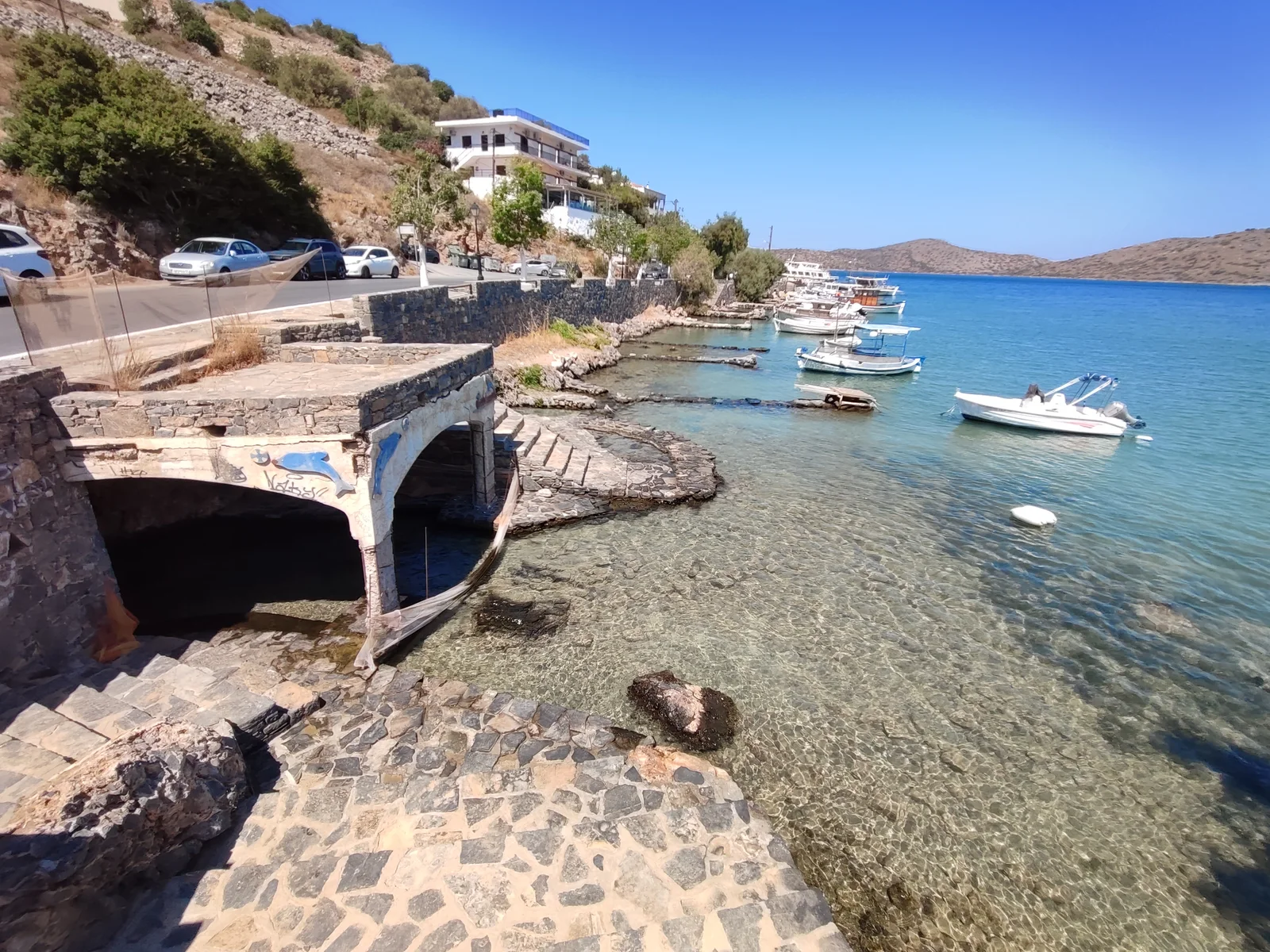
The water has not disappeared. At Schisma and Mavrikiano, two places known locally as vlychades, water remains visible beside the shore. At Schisma, an owner-recorded video shows it clearly moving. At Mavrikiano, it remains within the old covered structure at the water’s edge.
What has changed is the life around it.
There was a time when water did not simply appear from a tap inside the house. In a dry part of eastern Crete, households had to think about water differently: where it came from, how much was available, what quality it had and which work justified using it.
Local accounts preserve a small part of that older world. At Schisma, an attributed family memory records μαλλιά being washed at the vlychada. At Mavrikiano, a local newspaper records women from Elounda coming to the covered vlychada during periods of water scarcity to rinse laundry.
These are modest fragments of evidence, but they change how the places can be understood. The vlychades were not simply waters beside the sea. They entered daily life. Today the water remains, while the household work that once brought people to it has passed out of ordinary use.
For the wider geographical setting, see Elounda and Mirabello Bay.
What is a vlychada?
The word vlychada—βλυχάδα—belongs to an old Greek family of words connected with water that is slightly salty or brackish. The Centre for the Greek Language records the related forms βλυχός, γλυφός and γλυχός. In different local settings, related words can refer to brackish water, a shallow well or outlet, the place where such water is reached, or eventually a place name.
That wider history matters because the vlychades are not an Elounda invention. They belong to a vocabulary formed in places where the distinction between fresh and salt water was not always simple.
The clearest comparison in the available research comes from Lefkada. Its dialect lexicon defines vlyches (βλύχες) as shallow wells in the town, usually containing brackish water because of infiltration from the nearby sea. It also records their household value: homes and businesses used them for practical work while drinking water came from neighbourhood taps. The Municipality of Lefkada separately connects the name Vlycho with the numerous local vlyches from which water emerges along the foot of Mount Amali.
Lefkada and Elounda should not be treated as identical cases. The comparison shows something narrower and more useful: Greek coastal communities developed related words for waters that sat between simple categories and could become part of household geography.
In Elounda, the surviving record does not settle whether vlychada historically meant the water itself, its underground source, an outlet, a pool, a built access point or a section of shore. The word now identifies the two locally recognised shoreline waters at Schisma and Mavrikiano, together with the places formed around them.
A landscape of different waters
Elounda sits where sea, rock and dry ground meet closely. The difficulty of living here was not simply that there was no water. The more exact problem was that not all available water could serve the same purpose.
Rainwater could be captured and stored. Wells and boreholes could reach groundwater. Water could emerge naturally near the shore. Seawater lay immediately beside the settlements. Around Poros, seawater was deliberately managed through channels and salt pans. Later, piped supply brought another relationship between water and the home.
A household therefore lived among several kinds of water, but they were not interchangeable. Better-quality water had greater value for uses that required it. Water unsuitable for drinking could still be useful for other work.
That distinction makes the vlychades easier to understand.
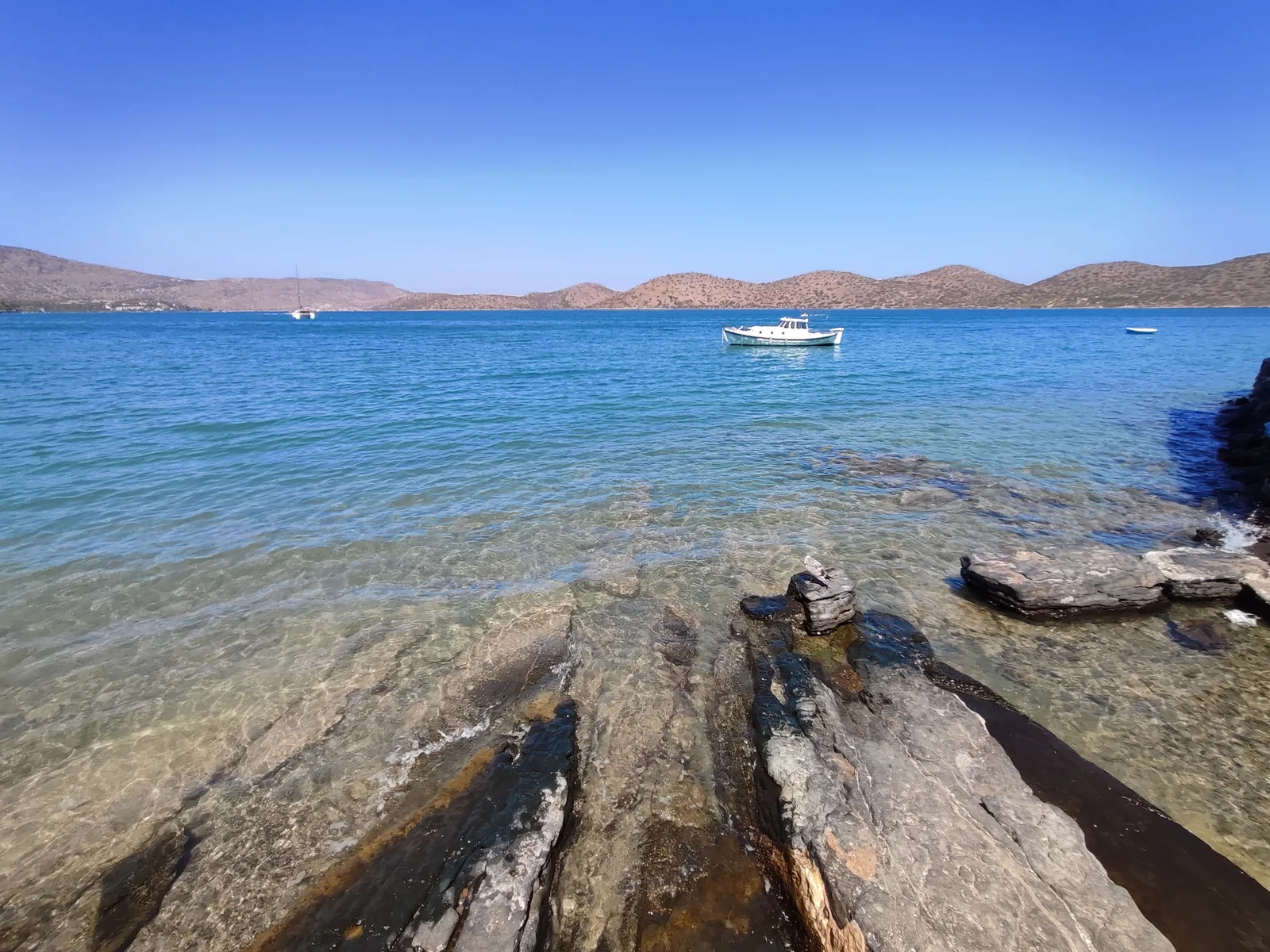
Brackish water can form near a coast when groundwater and seawater mix. Rainfall, drought, pumping and underground pathways can affect that balance. Research elsewhere in Crete and the Mediterranean supports those general processes, but no site-specific survey has mapped the underground routes, geological origins or chemistry of the Schisma and Mavrikiano waters.
For the history of daily life, the important point is simpler. Water beside the sea could still have practical value even when it was not water a household would choose for drinking.
The wider Mirabello landscape shows how seriously earlier communities had to manage supply. Nearby Spinalonga provides the clearest surviving example of a different strategy. Because the island had no natural springs, roofs, vaults, roads and conduits directed rainfall into cisterns, including large vaulted reservoirs documented by the Ephorate of Antiquities of Lasithi. This is evidence for Spinalonga, not proof that mainland households used the same system. It demonstrates the wider principle that water had to be captured, stored and allocated.
The old landscape can therefore be read as a set of different responses. Cisterns stored rainfall. Wells and boreholes reached groundwater. The vlychades offered locally reported brackish shoreline water. The salt pans worked deliberately with seawater. For the separate history of that engineered saline landscape, see Elounda’s salt pans and Poros windmills.
Two waters, two working places
Two locally recognised vlychada outlet areas have been field-identified along the Elounda waterfront. A 2025 local report also discussed two underground brackish flows, one near the Community Office and another before Mavrikiano, and described both as moving towards the waterfront.
They lie only a short distance apart, but they are physically different and preserve different kinds of evidence.
Schisma: moving water and an attributed memory
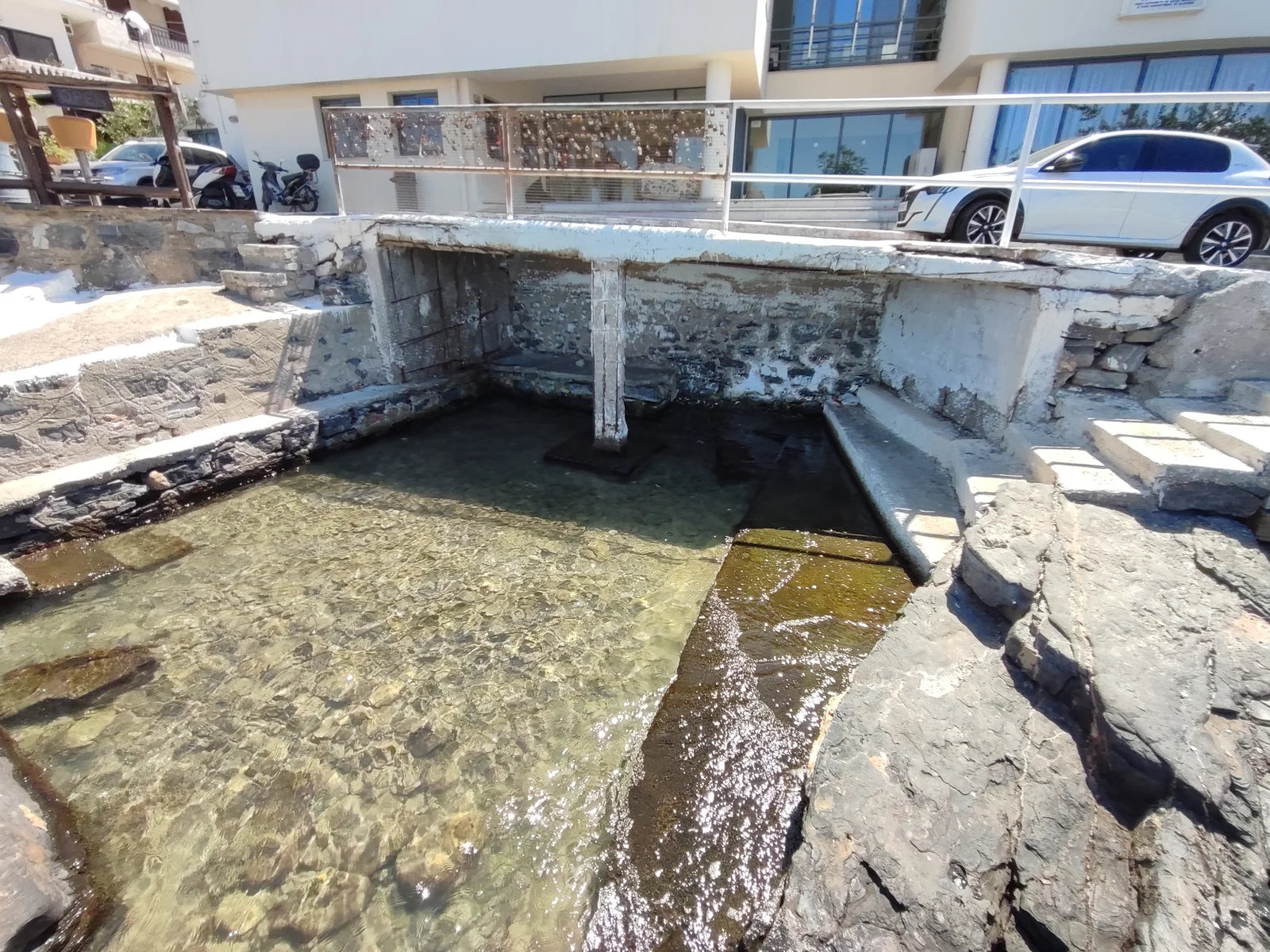
The Elounda or Schisma vlychada is beside Poulis Restaurant and opposite the First Port Department of Elounda: Vlychada 1 on the Schisma waterfront, at approximately 35°15’41.83”N, 25°43’28.30”E.
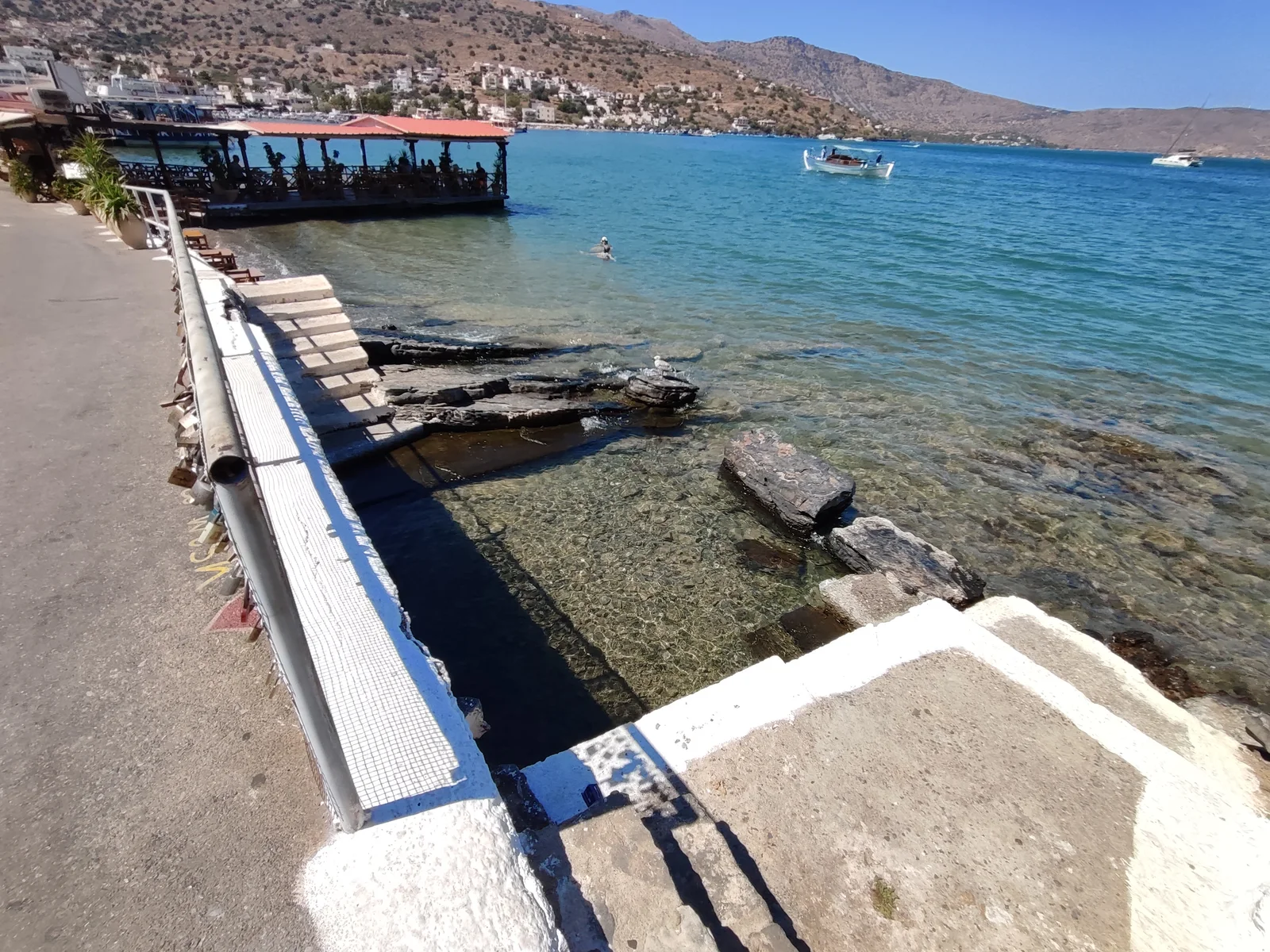
Here the present movement of the water is especially clear. An owner-recorded video from 23 August 2026 shows visibly moving water at the identified outlet area. The recording establishes that direct present-day observation, but not the water’s underground route, geological origin, chemistry, potability, historical flow or continuity through the year.
The human memory attached to Schisma comes from local reporting. In 2023, Anatoli attributed to Katerina Lempidaki a memory of her mother washing μαλλιά at this outlet. A 2025 Anatoli report also says that μαλλιά were washed there in earlier years.
The material meant by μαλλιά and the full process remain undefined. The reports do not provide a date, frequency, tools or a complete routine. They nevertheless place a remembered person and a practical act beside the water.
Mavrikiano: water inside a former working place
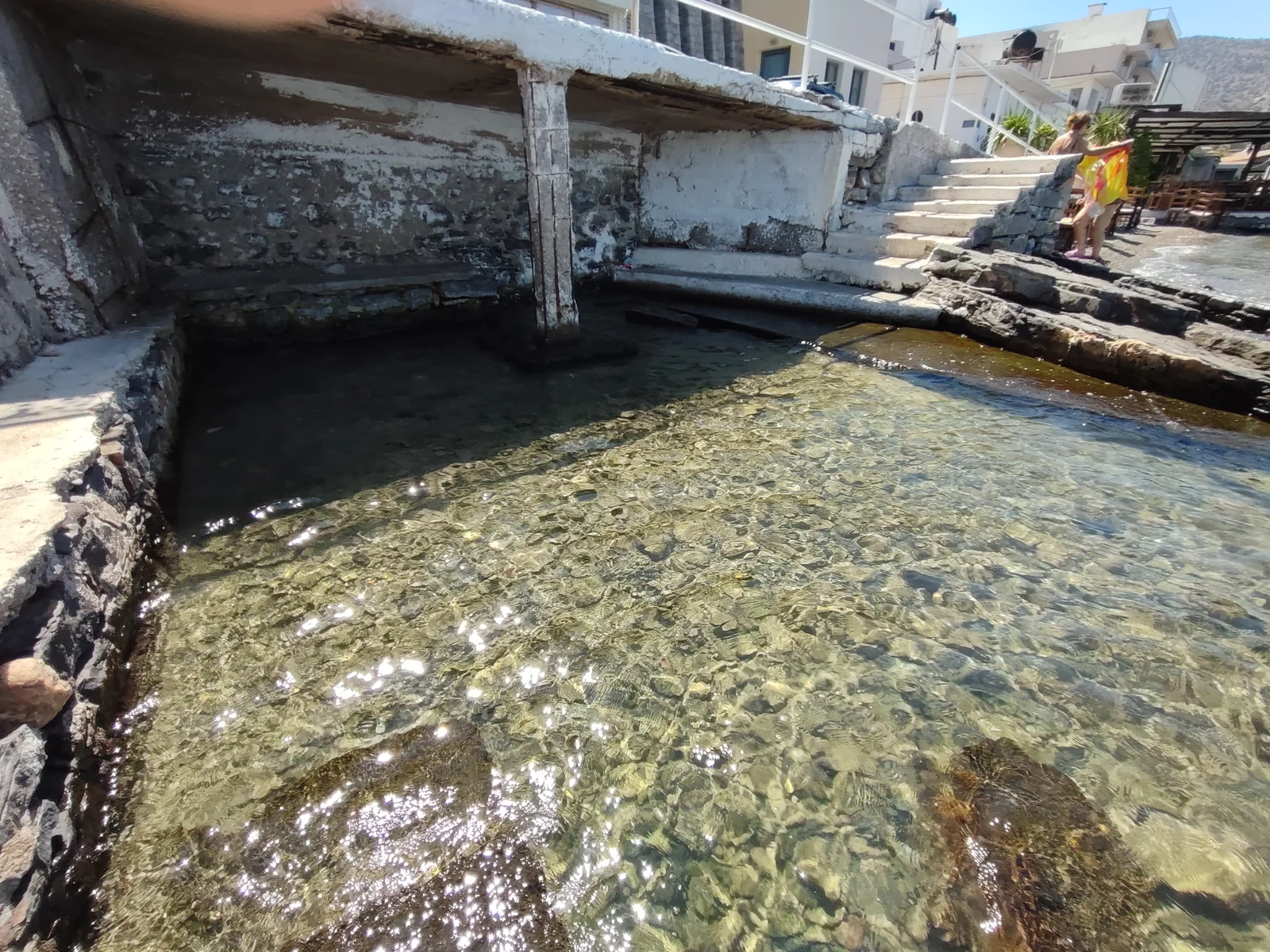
Farther north is the Mavrikiano vlychada, locally identified as κάτω Φούρνου (Kato Fournou): Vlychada 2 at Mavrikiano, at approximately 35°16’04.83”N, 25°43’17.62”E.
Here the relationship between water and human intervention is more visible. A covered stone-and-concrete structure sits immediately beside the shore. Steps descend towards the water, which remains visible within and around this built space.
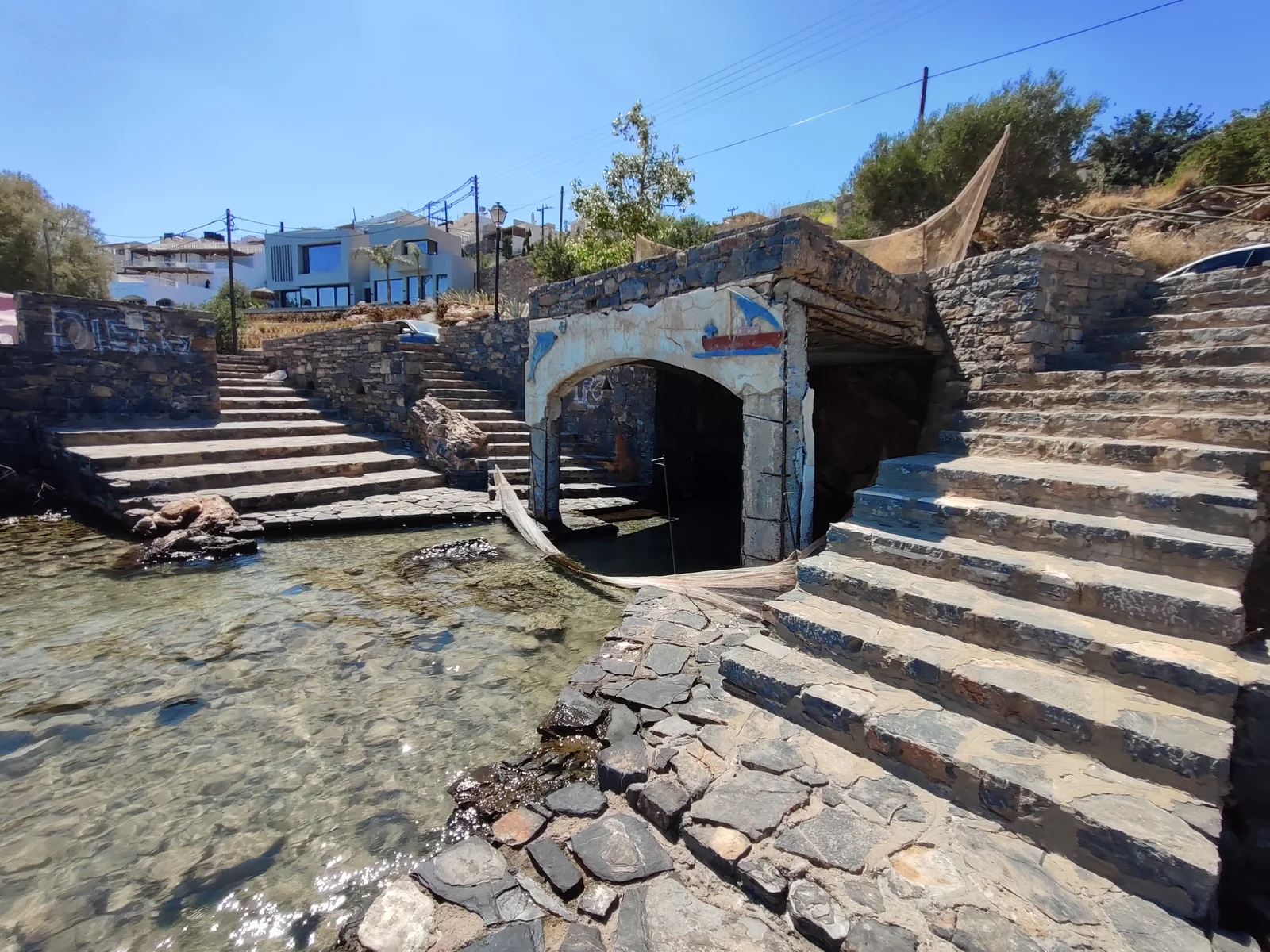
A 2022 report in Patris preserves the clearest account of its former practical role. During earlier periods of water scarcity, it says, women from Elounda came to this covered brackish vlychada to rinse laundry.
That short statement tells us three important things. There was a task. There were people responsible for it. And there were circumstances in which travelling to this particular water was worthwhile.
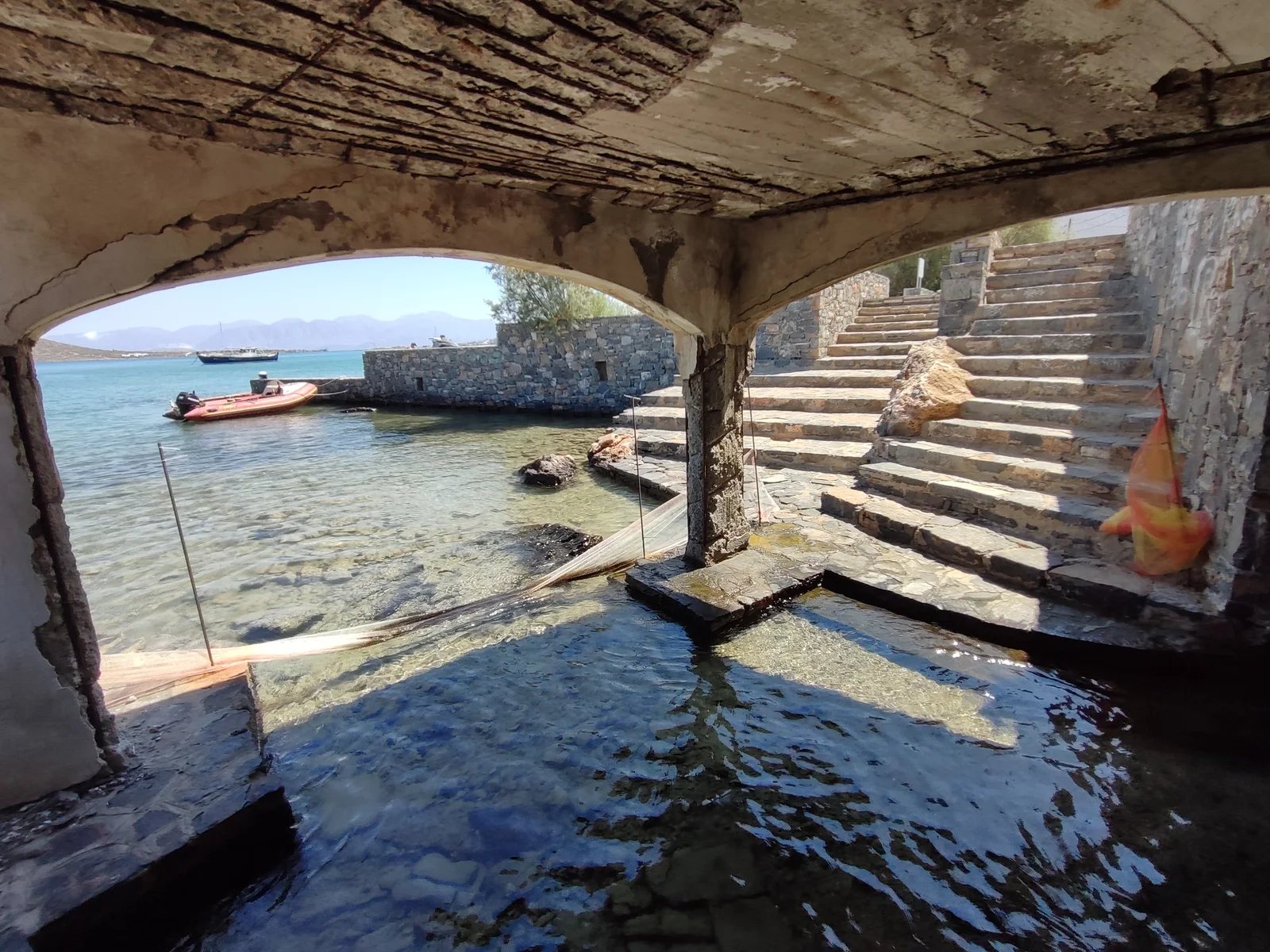
The structure raises a human question: why was access organised around this water? The present evidence cannot answer in full. We do not yet know when the enclosure was built, whether it replaced earlier forms or which parts belong to the period remembered in the newspaper account.
The combination of water, shelter and steps is nevertheless important when read beside the reported laundry use. Mavrikiano is not only a point on the shore. It is the surviving physical remnant of a working place.
The coordinates for both vlychades come from owner-supplied local field identification. They locate the present recognised outlet areas; they do not map complete underground flows or prove that the historically used water was reached in exactly the same physical form.
Taking the work to the water
Modern domestic water reverses an older relationship.
Today, water travels to the household. A pipe brings it through the wall. A tap releases it where it is needed. A washing machine combines water, movement and drainage inside the home.
Earlier household work could involve the opposite movement. The work had to travel to the water.
The Mavrikiano report makes that relationship visible. Women came to the shoreline because the water there was useful for part of the work they had to perform. The account does not reconstruct every stage, but it identifies the journey to the water as part of the task.
It is easy to underestimate what this meant physically. Water had weight. Wet textiles had weight. Washing required time, movement and dependable access to a sufficient supply. When suitable water was not available inside the house, the practical geography of the household extended outwards to the places where water could be reached.
The vlychada therefore belonged not only to the coast but to the working geography of the settlement. House, path, water and shoreline were connected through necessity.
The missing details should not be invented. The sources do not tell us on which days people came, precisely what they carried, which tools they used, where laundry was dried or how often the journey was made.
No invented scene is needed to understand the basic relationship. The water was somewhere else. People had to go to it.
Women and household labour
The surviving reports also preserve something about who carried part of this burden. At Mavrikiano, the people explicitly remembered coming to rinse laundry were women. At Schisma, the memory reaches the present through Katerina Lempidaki remembering her mother.
These fragments place the vlychades within the history of women’s household labour. They do not support a claim that every water-related task followed the same division, but they keep the people named by the evidence visible.
Much household labour leaves less formal documentation than major infrastructure. Public works may produce plans, contracts and engineering records. Repeated work within and around the home is more likely to survive through remembered practice, local words and the physical arrangement of a place.
That is why the two short newspaper references matter. They restore human activity to waters that could otherwise be described only through geology. The water was part of the natural landscape. The working place was made through human need and repeated use.
Different water for different purposes
Calling a vlychada brackish can make the water sound useless. That would misunderstand the older economy of water.
Water did not need to be suitable for every purpose to have value. Households living with limited supply could reserve better water for uses that required it and use other water for work that did not. The exact division of water within historical Elounda still needs further oral and archival research, but the Mavrikiano account already shows that locally reported brackish water could be worth using to rinse laundry during scarcity.
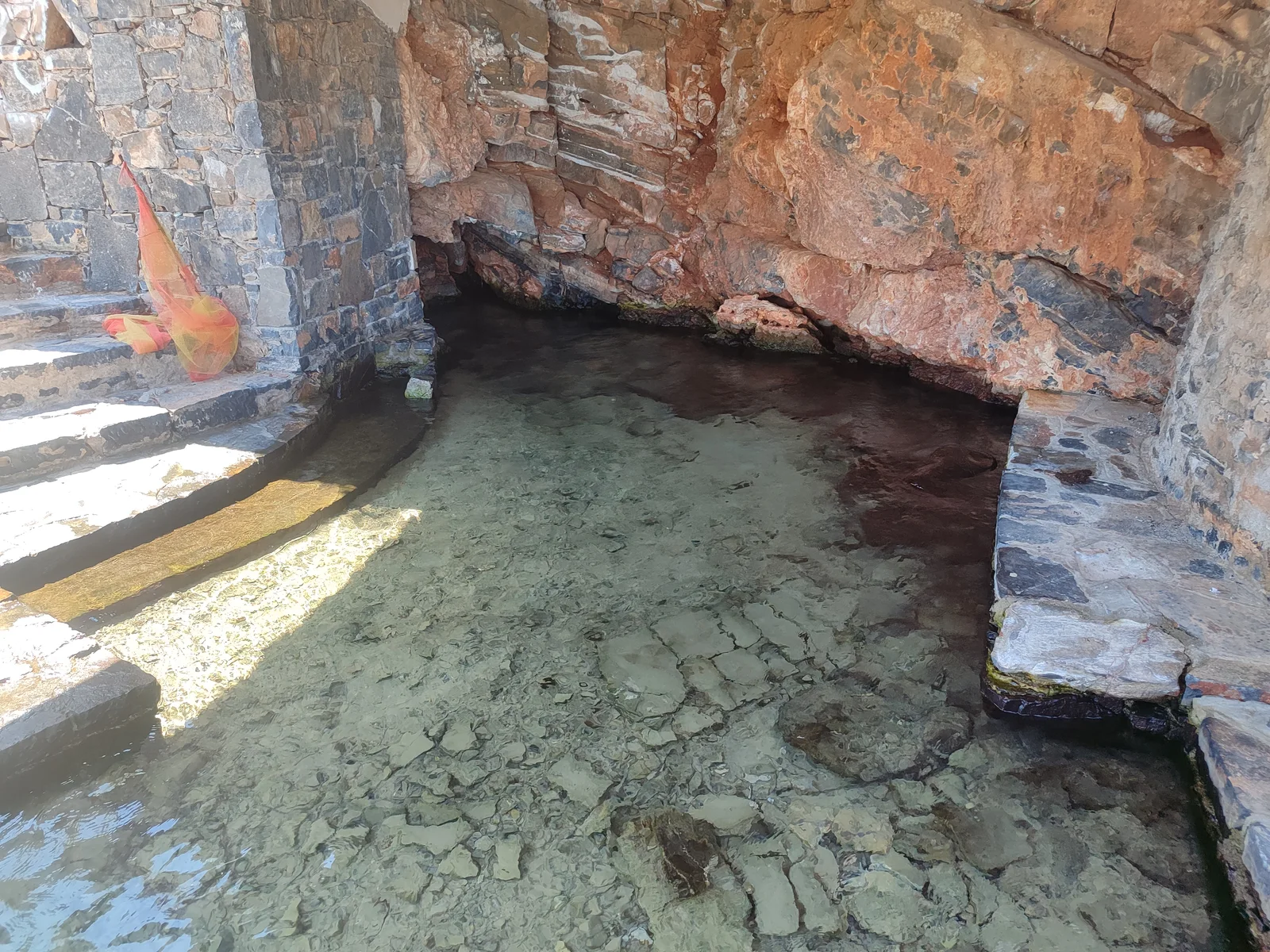
No laboratory analysis has been located for either Elounda outlet, and neither should be described as potable. There is also no evidence that brackish water made soap work better. Its historical value does not depend on either claim.
The principle is more ordinary. People use limited materials according to what each can do. Water that was not chosen for drinking could still reduce the amount of better water consumed by another task. The use recorded at Mavrikiano is a small example of environmental adaptation carried through household routine.
Elounda as a landscape of water and work
Seen this way, the vlychades belong to a larger Elounda story. Only a short distance separates very different water landscapes.
At Poros, seawater fed a productive system of salt pans. At Spinalonga, rain falling on roofs and paved surfaces was directed into cisterns. Along the mainland shore, the two vlychades marked places where locally reported brackish water could be reached. Elsewhere, wells and later boreholes reached groundwater below the surface.
Each system answered a different practical question. How could rainfall be stored? Where could groundwater be reached? Which water could serve household work? How could seawater become salt?
The coast was therefore more than an edge between land and sea. It was a working environment in which different waters were recognised and used differently. The vlychades formed one small part of that larger pattern.
When water entered the home
At some point, the practical geography began to change. Piped supply brought water closer to, and eventually inside, homes. Domestic appliances changed the physical organisation of washing. Work that had required access to an outside water source could increasingly be performed without leaving the house.
The exact chronology in Elounda has not yet been reconstructed. There is no verified date for when particular parts of Schisma and Mavrikiano received household connections, when supply became consistently dependable or when washing machines became common.
The transition may have been gradual, with old and new arrangements overlapping. That is a historical interpretation rather than a documented local sequence. A water source can remain useful after pipes arrive, and an established routine can continue while a new system spreads unevenly.
What the available evidence does show is the direction of change. The water did not need to disappear for the vlychades to lose their old household function. Water increasingly travelled to the work. People no longer had the same reason to take the work to the shore.
From working place to memory
By the early 2020s, local newspaper reports were no longer describing the vlychades as ordinary places of household work. They were discussing memory, physical condition and safety.
In 2022, Patris contrasted the earlier laundry-rinsing use at Mavrikiano with concern about the deteriorating cover and danger at the site. In 2023, Anatoli discussed the condition of both vlychades and called for attention to them.
The emphasis had moved from use to memory and maintenance. Yet the water remained. At Schisma, the 2026 video shows it visibly moving. At Mavrikiano, water remains visible beneath and around the covered structure.
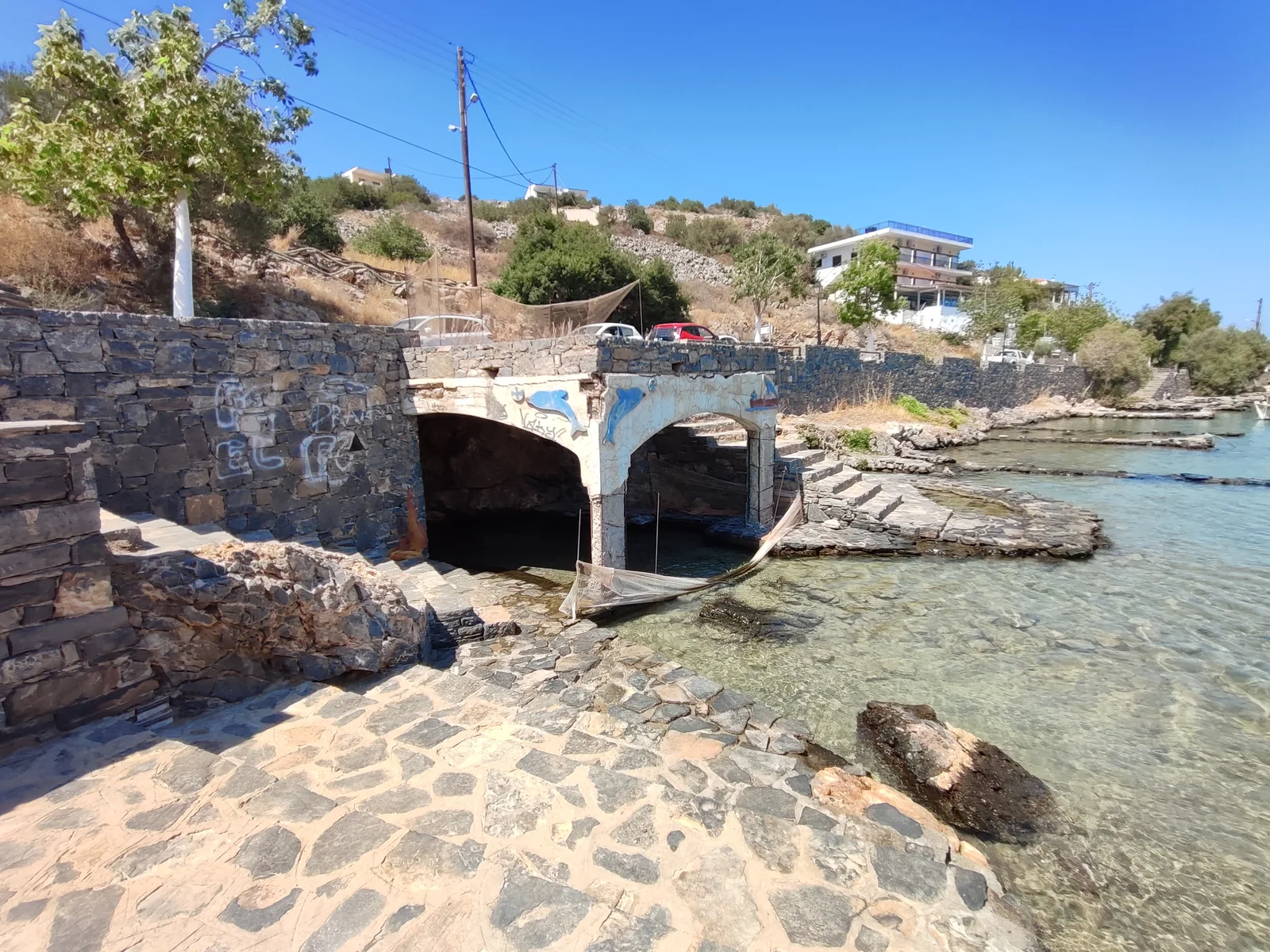
Most former working places are understood through a building that survives after the work has stopped: a mill without grain, a factory without workers, a warehouse without goods. The vlychades preserve a different contrast. The water that gave the places value is still present. What has fallen out of ordinary use is the human routine organised around it.
Mavrikiano can therefore be read as a small piece of vernacular infrastructure. There is water, enclosure, steps and the sea immediately outside. There is also a local account explaining why women once came there. No single element tells the whole story. Together they show how a natural feature became a working place because human need gave it a function.
For the wider chronological transformation of the shoreline, see A Short Chronological History of Elounda. For the relationship between the hillside settlement and waterfront today, see the Mavrikiano guide and the location guide.
Two histories moving at different speeds
The vlychades contain two kinds of time.
One belongs to water moving through the landscape. At Schisma, direct present-day evidence shows that movement continuing. At Mavrikiano, water and the covered structure remain visible, although the present photographs do not establish the character or continuity of the flow.
The other is human. A place becomes useful. Work grows around it. People go there because they need what it provides. Infrastructure and domestic technology change. The routine weakens, and eventually the same place survives without the activity that once made it part of ordinary life.
At Schisma and Mavrikiano, those histories now sit beside each other. The water remains. The women preserved in the local accounts no longer need to come to these places for household work. The covered structure at Mavrikiano remains beside the road and sea, while the water at Schisma is still visibly moving.
The vlychades have not disappeared. They have passed through a cycle as human places: from useful waters, to working places, to physical remnants of a change in daily life.
The water continues. What has passed into memory is the life that once surrounded it.
Sources
- Anatoli: local 2025 report on Elounda’s reported brackish flows.
- Anatoli: “Η υφάλμυρη βλυχάδα της Ελούντας” (The brackish vlychada of Elounda).
- Anatoli: “Οι δύο βλυχάδες της Ελούντας, στο Μαυρικιανό και στο Σχίσμα” (The two vlychades of Elounda, at Mavrikiano and Schisma).
- Patris: “Πολύ επικίνδυνο, δεν το βλέπουν;” (A dangerous covered brackish source beside the boatyard).
- Centre for the Greek Language: Kriaras Dictionary of Medieval Vernacular Greek.
- Centre for the Greek Language: γλυφός and related forms.
- Lefkada Dialect Dictionary: βλύχα.
- Municipality of Lefkada: Vlycho.
- Ephorate of Antiquities of Lasithi: vaulted cisterns of Spinalonga.
- Voudouris, K. S. (2021), “Status and codification of karst aquifer systems in Greece”.
- Kalisperi, D. et al. (2018), “A Transient ElectroMagnetic Method Survey in North-Central Coast of Crete”.
- Municipality of Agios Nikolaos: January 2026 Aposelemis-conveyance tender.