
Elounda’s wartime memory should be handled quietly. The bay is sheltered, Spinalonga is close to the shore, and the routes around Mirabello connect small settlements with the wider history of Crete. That is enough. The subject does not need dramatic language.
The most reliable starting point is the landscape itself: water, road, island, village, and the exposed north coast of Crete.
Crete in 1941
The Battle of Crete began on 20 May 1941, when German airborne forces landed around key points on the island. The Imperial War Museums account focuses on the battle around Maleme, Chania, Rethymno, and Heraklion, and explains how German control of Maleme airfield changed the course of the fighting.
Elounda was not the center of that battle. It should not be presented as if the main fighting happened here. Its importance is more local and geographic: Mirabello Bay belongs to the same island story, and the coast shows why sheltered water and routes mattered during periods of conflict.
Mirabello Bay as Geography, Not Myth
The bay helps explain why this part of Crete has been watched and used across different periods. It gives shelter. It connects villages. It opens northward toward sea routes while remaining close to the hills and inland roads.
For wartime writing, that geography is a safer foundation than repeating unverified stories. Exact military installations, named incidents, aircraft activity, and local personal accounts should be used only when they can be traced to reliable sources.
Spinalonga During the War Years
Spinalonga had its own modern history before the Second World War. The Ephorate of Antiquities of Lasithi records that the island was used as a leprosy hospital from 1903 to 1957. It also records the role of Epaminondas Remoundakis and the Brotherhood of the Sick in improving daily life on the island before the war.
The same official account says that these efforts were interrupted by the Italian and German occupation of Crete, and that living conditions became difficult during the war years. For the longer shoreline chronology around Spinalonga, see A Short Chronological History of Elounda. This is the kind of fact that should be stated plainly.
How to Visit With Care
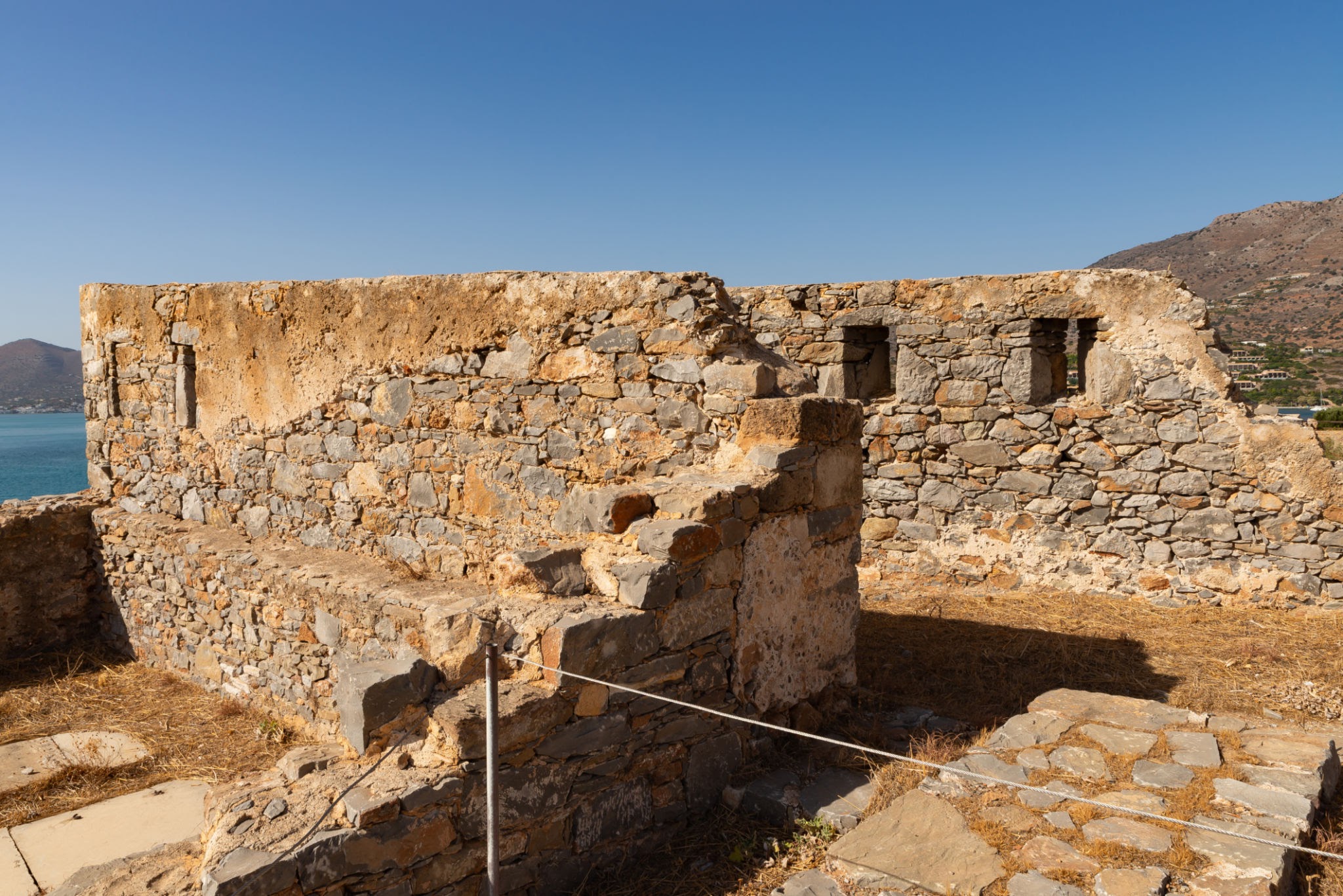
A respectful visit starts with orientation, not performance. Look across the bay from Elounda. Follow the road north to Plaka. If visiting Spinalonga, read the official material on site and keep the island’s medical and social history separate from broader wartime memory.
The Mavrikiano Distances and Area Guide helps with boat, road, and walking orientation around Spinalonga. For a broader essay on Elounda, Mavrikiano, Olous, and the island, read Where the Sea Holds Memory. The Vrouchas guide gives useful context for the upland side of the area.
Elounda’s wartime memory is strongest when it stays close to what can be known: the bay, the island, the roads, and the lives affected by events larger than the village itself.
Sources and Image Credits
- What Was the Battle of Crete?, Imperial War Museums.
- Modern Times, Ephorate of Antiquities of Lasithi.
- Image credit is shown in the article caption.